Understanding the Cost of a Radon Mitigation System for Your Home
What drives the expense of fixing a radon problem?
When a home test reveals elevated radon levels, the next step is usually a mitigation system. Homeowners in York, Pennsylvania, and elsewhere often start by wondering about the radon mitigation cost. That is a natural first question, but the answer depends on several factors specific to the house itself. Understanding what goes into the price helps a homeowner make an informed decision rather than focusing on a single number.
A radon mitigation system is not a one-size-fits-all product. The most common approach is active soil depressurization, often called sub-slab depressurization. This method creates a suction point beneath the concrete floor slab and uses a radon fan to draw soil gases away from the house and vent them safely above the roofline. The cost of such a system varies with the complexity of the installation, the type of foundation, and the materials needed.
Foundation type and installation complexity
The largest variable in any radon mitigation cost is the foundation of the home. A house with a full basement and a poured concrete floor is usually the simplest to work with. The contractor can drill a small hole in the slab, create a suction pit, and run the vent pipe up through the interior or exterior wall. This straightforward setup requires less labor and fewer materials.
Homes with crawlspaces or slab-on-grade foundations present different challenges. A crawlspace may require sealing a heavy plastic vapor barrier across the dirt floor, then venting from beneath that barrier. A slab-on-grade home might need the pipe to be routed through an interior closet or chase. Each extra step adds to the time and supplies needed, which influences the final price.
Another factor is the soil type beneath the house. Gravelly, sandy soils allow air to move easily, so a single suction point can cover a large area. Clay-heavy or compacted soils resist airflow, requiring multiple suction points or a more powerful radon fan. The contractor must assess the sub-slab pressure field extension during installation to confirm the system is effective, and adjustments cost time and materials.
Components of a standard system
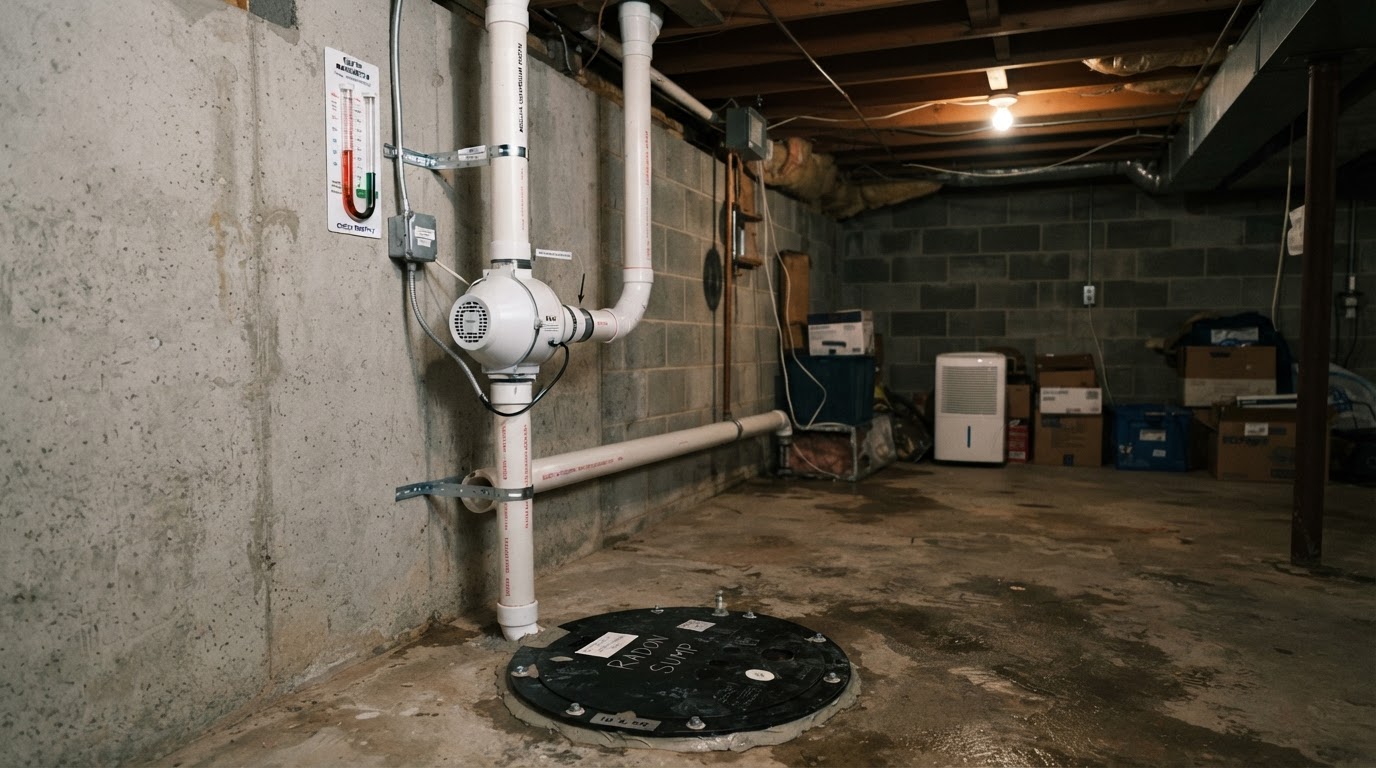
A typical active soil depressurization system includes several key parts. The radon fan is the main component; it must be rated for continuous outdoor use and sized for the home's footprint. The vent pipe, usually three or four inches in diameter, runs from the suction pit up to the roof. A manometer is installed on the pipe as a simple gauge that shows the system is operating correctly. Sealing cracks in the basement floor and walls is also part of the process, since any opening can reduce the system's efficiency.
These components are standard, but their quality and specifications vary. A fan from a reputable manufacturer costs more than a generic model, but it is also more reliable and quieter. The pipe material, the type of sealing caulk, and the exterior vent cap all affect the total expense. A thorough contractor will itemize these parts in the estimate so the homeowner understands what they are paying for.
Labor and local factors in York, Pennsylvania
Labor rates differ by region, and even within a city like York, Pennsylvania, the cost of a certified radon professional reflects local wages and overhead. A company that invests in proper training, insurance, and equipment charges accordingly. Trying to save money by hiring an uncertified handyman can lead to a system that does not work or fails prematurely. The manometer is a good indicator: if the gauge does not show a stable reading, the system is not pulling enough suction, and the problem remains.
Local building codes and climate also play a role. In Pennsylvania, the frost depth affects how the exterior pipe must be supported and insulated. The point where the pipe exits the house must be sealed against weather and pests. These details are not optional, and they add to the overall radon mitigation cost. A contractor familiar with York's conditions will know exactly what is required.
Maintenance and long-term considerations
Once a system is installed, it needs very little maintenance, but it is not zero. The radon fan runs continuously. Most models last five to ten years, depending on the brand and operating conditions. Replacing a fan is a straightforward job, but it has a cost. The manometer should be checked monthly; if the reading changes, something may be wrong with the fan, the pipe, or the seal. Regular checks prevent a quiet failure that leaves the home unprotected.
Sealing cracks is not a one-time task either. Houses settle, and new gaps can appear. A homeowner should inspect the basement or crawlspace periodically and reseal any openings. This small effort keeps the system working at peak efficiency and avoids the need for more expensive repairs later.
Choosing a certified contractor
The most important decision a homeowner makes is who installs the system. A certified contractor follows industry standards and can guarantee the work. They will perform a post-installation test to confirm radon levels have dropped below the EPA action level. Without that test, there is no proof the system works. Certification also means the contractor stays current with best practices and local code requirements.
In York, Pennsylvania, several contractors specialize in radon mitigation. Asking for references, checking for certification, and getting a written estimate that details the scope of work is standard practice. A contractor who cannot explain what they will do and why is probably not the right choice. The radon mitigation cost should be transparent, with no hidden charges for materials or labor that were not discussed upfront.
Comparing options and making a decision
Homeowners often compare a few quotes before deciding. While price matters, the cheapest bid is not always the best value. A low price might mean a smaller fan, thinner pipe, or less thorough sealing. Over time, those shortcuts can lead to higher electricity bills, premature fan failure, or a system that does not lower radon enough to pass a test. Paying a fair price for quality components and skilled labor is usually the smarter investment.
Some homeowners consider DIY mitigation, especially for sealing cracks or installing a simple vent. But active soil depressurization requires drilling through concrete, routing pipe through walls, and wiring the fan. Mistakes can be costly and dangerous. Most experts recommend hiring a certified professional for any system that involves a fan and roof vent.
The goal is a system that runs reliably for years, keeps radon levels low, and gives the homeowner peace of mind. The upfront expense is part of that, but so are the quality of the installation and the contractor's reputation. Focusing only on the price tag misses the bigger picture.
Understanding what goes into a radon mitigation system helps a homeowner budget realistically and choose a contractor wisely. The process is straightforward, but it involves decisions that affect the home's safety and the system's longevity. Taking the time to learn about the components, the installation, and the local market makes the whole experience less stressful and more successful.